

The abuser managed for years to keep the woman isolated from family and friends, and even the authorities had no knowledge of her captivity. She had no access to a phone or the internet
Listen to the article
His name, James Earl Johnson, has recently been filling crime reports across major media outlets in the United States.
He gained unwanted notoriety after it was discovered that he had kept his 46-year-old wife with a disability locked inside their home in Clear Lake, in the U.S. state of Texas, for five years.
The motives behind this shocking case of domestic violence remain unknown, as does the identity of the victim, who is only known to have a severe disability.
During all that time, Johnson managed to isolate her from relatives and friends, and authorities were unaware of her situation. She had no access to a phone or the internet.
Police revealed that the woman was physically abused and severely malnourished. He allegedly gave her only one egg a day and a modest dinner. In addition, he failed to provide the necessary medical care required for her disability.
Johnson ultimately sealed his own fate. Two weeks ago, he briefly left his phone on a bedside table in the room where the woman was locked. She quickly used the opportunity to call the police. During the call, Johnson entered the room, slapped her, and ended the call, but the police had enough time to trace the location.
He was arrested the same day and charged with injuring and abusing a person with a disability. He was later released on $100,000 bail, but only temporarily, as he is expected to face a long prison sentence after trial.
Johnson had purchased a five-bedroom house worth one million dollars, where he had lived with his wife for at least six years, appearing to lead a normal life. Meanwhile, the woman remains in hospital, undergoing rehabilitation after her ‘peaceful’ married life.
Employment statistics at this moment do not support the proclaimed goal of the European Commission of creating a society of equal opportunities
Listen to the article
There are still no significant improvements in better positioning Europeans with disabilities in the labour market.
Proof of this is also a joint letter that as many as 125 organisations sent these days to the European Commission, calling on it to publish a new EU Guarantee for the Employment and Skills of Persons with Disabilities as part of the updated Strategy for the Rights of Persons with Disabilities.
In this letter, organisations state what targeted funds and programmes are needed to reduce the high unemployment rate of persons with disabilities. Among other things, organisations are calling for dedicated funding to enable access to regular employment opportunities, apprenticeships or training. Likewise, better employment opportunities in sheltered workshops. Employment programmes must be designed in such a way as to offer support to companies and organisations in providing the necessary accommodations for a person with a disability in the workplace.
What is, however, particularly important for organisations is that the EU Guarantee for the Employment and Skills of Persons with Disabilities must not affect the right to receive disability benefits and other state support.
– This Guarantee is a key step to ensure that persons with disabilities have equal conditions in the world of work. If we want a competitive Europe, it is essential that we provide everyone with equal opportunities to contribute to the community – said Yannis Vardakastanis, President of the European Disability Forum.
Employment statistics at this moment do not support the proclaimed goal of the European Commission of creating a society of equal opportunities. Namely, only 52.7 percent of persons with disabilities are employed in the European Union, compared to 76.7 percent of persons without disabilities.
Previous research by the European Disability Forum shows that the gap is mainly a consequence of the lack of necessary accommodations and an insufficient supply of assistive technologies. In addition, the digital skills of employees with disabilities are at a significantly lower level compared to those without disabilities.
The joint letter sent to the European Commission calls for the Guarantee to be a key action of the ‘Enhanced Strategy for the Rights of Persons with Disabilities’, and it will be presented during the meeting of the College of Commissioners of the European Commission at the beginning of this May.
Until the development of these sneakers, Chris Nikic regularly struggled to run even a few kilometers without pain and blisters, as there was no footwear designed to meet the unique needs of his foot anatomy
Listen to the article
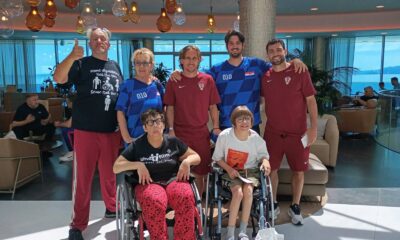
American of Croatian descent Chris Nikic served as an inspiration to one of the world’s largest sports equipment companies, Adidas, in creating a new model of sneakers specifically designed for people with Down syndrome.
Chris Nikic was the first person with Down syndrome to complete an Ironman triathlon. At Adidas, they say that through their shared ambition with Chris to break barriers, they embarked on a multi-year mission to design running shoes that meet the unique needs of people with disabilities and make sport more accessible.
Until the release of this sneaker, called Supernova Rise 3 Adaptive, Chris regularly struggled to run even a few kilometers without pain and blisters because no shoe had been designed to meet the specific needs of his foot anatomy. Since partnering with Adidas, Chris has worn various prototypes that not only allowed him to complete three Ironmans, four half-Ironmans, and 20 marathons.
– What feels like a pain level of 2 out of 10 to most people feels like an 8 to me. Adidas understood exactly what I needed in a shoe. Now I love running because my feet no longer hurt – said Chris.
To ensure the sneakers meet diverse needs, Adidas partnered with GAMUT Management, a leader in inclusive product design, to facilitate product testing that provided the team with key insights and feedback throughout the development process. These focus groups included people with Down syndrome, wheelchair users, individuals living with chronic illnesses, people with mobility and fine motor challenges, as well as those with upper and lower limb differences, and also included two Paralympians, Tracy Otto and Haven Shepherd.
– My experience collaborating with Adidas on this project has been incredible and a true adventure. The entire team was dedicated to making this the best adaptive sneaker available, incorporating features that give me the freedom and independence I had been missing for so long – said Paralympian Tracy Otto.
In the context of the old European continent, rich in archaeological sites and cultural monuments protected by UNESCO, the question of accessibility for persons with disabilities becomes particularly sensitive. How can ancient buildings, squares, and streets be adapted to modern standards of inclusion without compromising their authenticity?
Listen to the article
We sought answers in Rome – a city more than 2,700 years old, whose historical layers encompass ancient ruins, Renaissance palaces, and Baroque squares.
A city of challenges – and compromises
At first glance, Rome can be demanding to navigate. Its hilly terrain, cobblestone streets, narrow historic alleys, and wide, traffic-heavy avenues present challenges not only for tourists but also for residents. A shortage of parking spaces further complicates mobility, and increasingly large vehicles often partially occupy pedestrian walkways.
Despite these objective obstacles, there is clear evidence of systematic efforts to improve accessibility. Adaptations are being implemented gradually, with careful consideration given to the protection of cultural heritage.
Along wider avenues, tactile paving has been installed to assist blind and visually impaired persons, and some traffic lights are equipped with audible signals. The main railway station and metro stations feature tactile maps and Braille signage. Metro Lines B and C are largely accessible, while Line A includes selected stations equipped with elevators. Buses are fitted with ramps that drivers deploy manually when needed, ensuring functionality without altering the visual integrity of the vehicles.
History through the lens of accessibility
Photo: URIHO
Rome’s most visited landmarks offer varying levels of accessibility.
The areas surrounding the Trevi Fountain and Piazza Navona are generally accessible; however, large crowds can significantly hinder movement for wheelchair users.
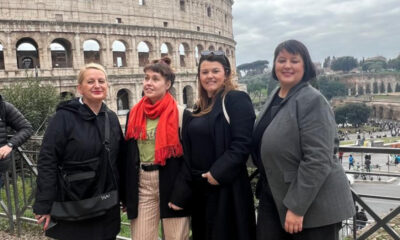
By contrast, the Colosseum stands out as an example of good practice. It is equipped with modern elevators, ramps, and level pathways, and Braille panels are installed inside the monument. Despite being nearly two thousand years old, the site allows for a largely inclusive visitor experience.
The Roman Forum and the Palatine Hill are considerably more challenging. The uneven original terrain and numerous staircases make detailed exploration difficult. Although certain accessible routes and an elevator are available, visiting without assistance is often not feasible, and careful planning is essential.
The Spanish Steps remain architecturally complex in terms of accessibility. Wheelchair users can reach the upper level via an alternative route using a nearby metro elevator, followed by a ramp. While functional, this solution depends on the operational status of the station.
The interior of the Pantheon is accessible, while the district of Trastevere is generally navigable, though its cobblestones may present challenges.
Particularly noteworthy is the Altare della Patria (Vittoriano), which is largely accessible to persons with disabilities. The complex is equipped with elevators and ramps, and the museum housed within the building is also accessible. Similarly, St. Peter’s Basilica in Vatican City provides step-free access, ramps, and elevators.
Accommodation, dining, and visitor treatment
Photo: URIHO
Most hotels, particularly newer establishments, offer adapted rooms and bathrooms for guests with disabilities, although prior verification of specific facilities is recommended.
An interesting aspect of accessibility relates to dining: restaurants commonly offer gluten-free pizza and pasta options at minimal additional charge, an important consideration for visitors with specific dietary needs.
Persons with disabilities are entitled to free admission to landmarks upon presentation of valid identification. In addition, they and their companions are granted priority access without waiting in line, significantly easing visits to the city’s most frequented attractions.
Between heritage and the future
Rome demonstrates that preserving cultural heritage and developing accessible tourism are not mutually exclusive goals. While the complete adaptation of a historic city will never be simple or possible numerous thoughtful compromises are visible – discreetly installed elevators, tactile pathways, Braille signage, and adapted public transport systems.
The main challenges remain uneven terrain, cobblestones, and large crowds. Nevertheless, with careful planning and adequate information, the Eternal City can be accessible to a far wider range of visitors than one might initially expect.
Rome’s example confirms that inclusion is not a modern luxury, but a standard toward which even the oldest European cities can – and should – strive.