
Disability digest
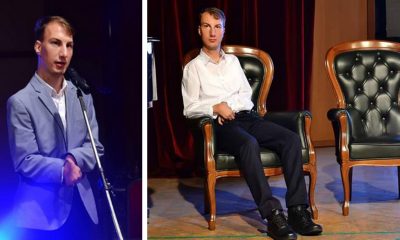
MY STORY Deni Černi



My message to other people with disabilities would be to never give up no matter how hard it is and to try to find something that will make them happy and fulfill their life, says Deni
Deni Černi was born on May 3, 1993 in Virovitica, and he is a computer technician by profession.
– At the age of six, I fell ill with dystonia, and I spent a large part of my childhood in hospitals for various examinations – Deni tells us.
It was not easy to accept a lifelong disability.
– In the beginning, it was really difficult to deal with disability and the fact that you are ‘different’, but luckily, I had my parents behind me, who explained to me very well that being a disabled person is nothing unusual and that in some situations it will be more difficult for me than some people of my age, but to never give up – says Černi.
– During my primary and secondary education, I had problems with the stares of ‘curious’ people who don’t know me, but I quickly got used to it since I have a good attitude and I approach every person in a friendly way – continues Deni.
His love for athletics was born in his teenage years.
– At the age of 14, I received an invitation from Darko Kralj to ask if I would like to try training in athletics, and a desire arose in me and I immediately agreed. After the first practice, I liked the shot put and wanted to continue. As I trained, more and more competitions came, and thus additional motivation to be better and achieve more – he tells us, and today he really has a lot of medals, competitions and awards behind him.
World Junior Championships:
– 2009 Nottwil, Switzerland:
1st place, ball F54 6.63 meters
1st place, discus F54 20.70 meters
2nd place, javelin F54 13.65 meters
– 2010 Olomouc, Czech Republic:
1st place, javelin F54 15.15 meters
1st place discus F54 23.75 meters (world junior discus record in the F-54 category)
2nd place, ball F54 7.05 meters
European Junior Championship
– 2011 Brno, Czech Republic – gold and two silver medals F54: 1st place discus, 2nd places shot put and javelin
IWAS World Games:
– 2009 Bangalore, India – 5th place in discus throw F54
– 2011 Sarjah-Dubai, UAE – bronze medal in discus throw F54, 23.95 meters
– 2017 Lisbon, Portugal gold medal in shot put F33, 8.88 meters, bronze medal in discus throw F33, 20.50 meters
W.P.A. European championship:
– 2012 in Stadskanaal, Netherlands – 6th place in discus throw F54, 19.2 meters
– 2018 in Berlin, Germany – silver medal in shot put F33, 10.10 meters
– 2021 in Bydgoszcz, Poland – bronze medal in shot put F33, 10.42 meters
W.P.A. World Championship:
– 2013 – Lyon, France – 11th place in discus throw F54
– 2017 – London, UK – 7th place in shot put F33, 8.87 meters
– 2019 – Dubai, UAE – 5th place in shot put F33, 10.41 meters
Paralympic Games:
– 2021 – Tokyo, Japan – bronze medal in shot put (11.25 meters, personal record)
Recognitions and awards
2009 – Charter of the City of Grubišno Polje, public recognition of the City of Grubišno Polje
2010 – Plaque on November 4, 1991, public recognition of the City of Grubišno Polje
2011 – Tihomir Trnski plaque, public recognition of the Bjelovar-Bilogora County
2009 and 2010 – Golden plaque of the Sports Association of Bjelovar-Bilogora County for the best athlete with a disability in the junior competition
2018, 2019, 2020 and 2021 – Golden plaque of the Sports Association of Bjelovar-Bilogora County for the best athlete with a disability in the senior competition




People with disabilities often have significantly greater electricity needs than other citizens across the European Union
Listen to the article
Energy poverty is affecting a growing number of households across the European Union, and recent research shows that it has a disproportionate impact on people with disabilities. The reasons for this disparity are numerous and extend well beyond financial hardship alone.
People with disabilities generally have higher electricity needs because many rely on medical equipment and assistive devices. They also tend to consume more energy for heating and cooling their homes, particularly people with physical disabilities whose health and well-being often depend on maintaining stable indoor temperatures.
To help address the growing problem of energy poverty, the European Network on Independent Living (ENIL), together with partners in the ASSERT project, has launched an online learning platform for professionals working with households affected by energy poverty.
The ASSERT platform has been developed primarily for organisations representing people with disabilities, social workers, energy advisers, healthcare professionals and other specialists who need additional knowledge and practical skills to tackle energy poverty more effectively.
In addition to professional training, the platform provides people with disabilities with practical advice and guidance on avoiding energy poverty, managing household energy costs and making more efficient use of energy systems.
More information is available on the ASSERT website at assert.aisforacademy.eu. Registration is free and open to organisations and professionals interested in strengthening the capacity of people with disabilities to respond more effectively to energy poverty.
ASSERT is a relatively new European project funded through the LIFE Programme. Over the past year and a half, it has been working to ensure that people with disabilities are not left behind in Europe’s transition to clean energy. The project currently operates in five European Union member states—Cyprus, France, Greece, Italy and Spain—and brings together experts from a wide range of fields, including disability rights and energy efficiency.

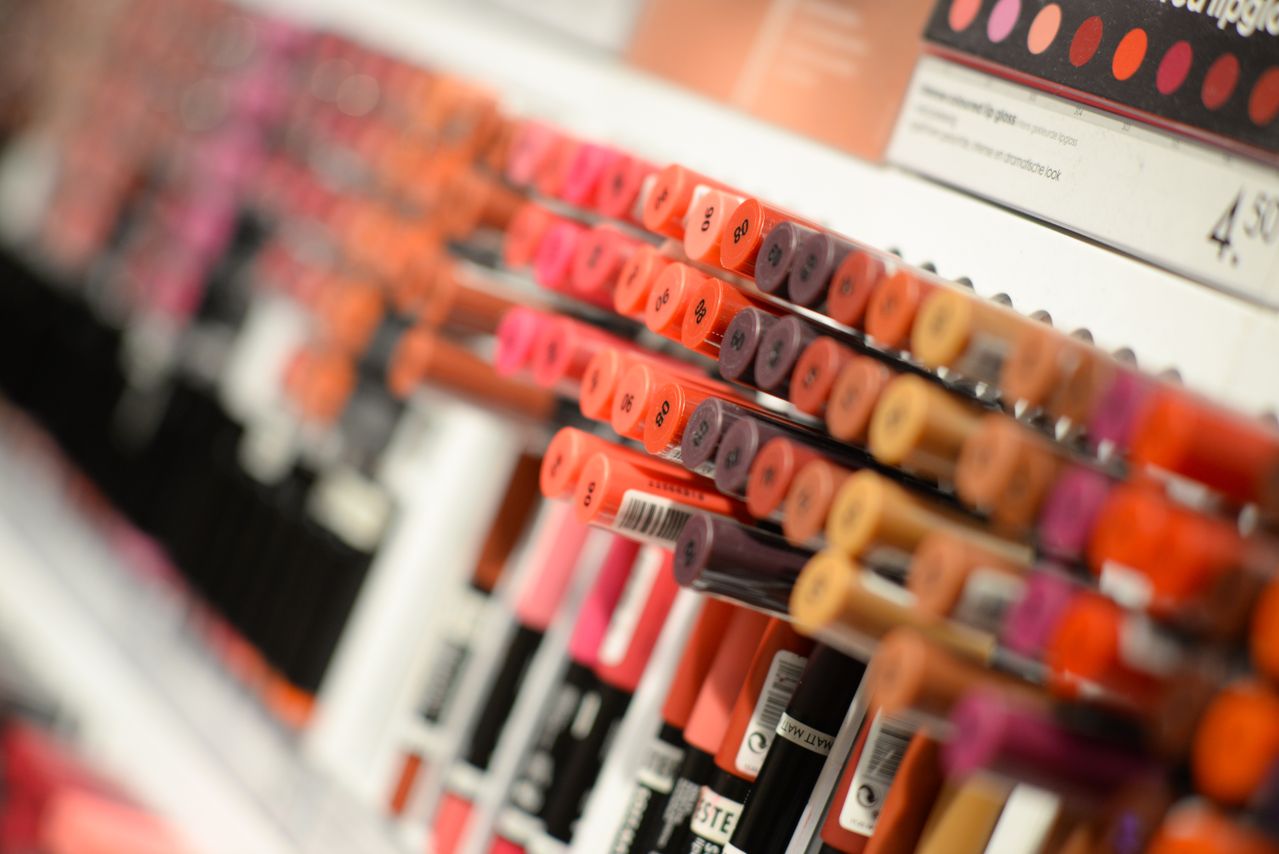
Global beauty retailer Sephora has introduced a ‘Quiet Hours’ programme across its stores worldwide, aiming to create a more comfortable and accessible shopping experience for neurodivergent people and anyone who prefers a calmer retail environment
Listen to the article
The initiative is the first global programme of its kind in the beauty retail sector. During designated Quiet Hours, stores will lower the volume of in-store music, adjust digital displays to reduce visual stimulation and, where possible, minimise the presence of strong fragrances. At selected locations, customers will also have access to additional options, such as mobile checkout, making the shopping experience simpler and less stressful.
The programme was developed in partnership with Open Inclusion and Purposeful Futures, with direct input from neurodivergent customers and employees whose experiences helped shape the initiative.
Before its global rollout, Sephora tested the programme in 32 stores across eight markets. The pilot project found that the majority of neurodivergent customers believed Quiet Hours significantly improved their shopping experience. In addition, 90% of all surveyed customers said the initiative made stores more inclusive and welcoming for everyone.
Experts involved in developing the programme note that people with autism, ADHD and other sensory issues often find shopping centres highly challenging environments because of loud music, bright lighting, strong fragrances and large crowds. Even relatively small adjustments, they say, can substantially reduce sensory overload and make shopping a more comfortable and independent experience.
The initiative has also received positive feedback from employees, who report that the calmer environment enables better communication with customers and reduces stress throughout the working day.
By introducing Quiet Hours, Sephora joins a growing number of major retailers offering sensory-friendly shopping periods. Similar initiatives have been adopted in recent years by supermarkets, department stores and cinemas, reflecting a broader understanding that accessibility is not only about removing physical barriers but also about creating environments where people with sensory sensitivities can feel safe, comfortable and included.
Sephora says Quiet Hours represent just one step towards creating a more inclusive shopping experience and has pledged to continue working with the neurodivergent community to develop solutions that meet the needs of an even wider range of customers.

Without young people with disabilities in newsrooms, government ministries and national parliaments, the slogan “Nothing About Us Without Us” remains just that—a slogan, a decorative phrase displayed on banners at disability rights marches.
Listen to the article
Consider for yourself to what extent young people with disabilities in the European Union truly enjoy their rights, and whether those rights are fully realised or remain largely declarative—a polished façade of the welfare state with deep cracks beneath the surface.
One answer to these questions can be found in a survey conducted last year by the Youth Committee of the European Disability Forum (EDF). The survey gathered responses from 183 young people with disabilities across all EU member states. Its findings were published in the EDF manifesto on the everyday lives of young people with disabilities, entitled The Right to Shape Our Future.
The survey results should serve as a wake-up call for decision-makers across the European Union. Respondents expressed dissatisfaction with every major aspect of social life. Overall, young people with disabilities said they do not enjoy the right to live in a fair and accessible society. They also reported that their opportunities to shape their own futures and participate in decisions affecting their lives are significantly restricted.
When it comes to influencing society, respondents said that the media either ignore their lives and rights altogether or portray them through stereotypes. Even when useful information is available, it is often presented in formats that remain inaccessible to people with disabilities.
Without young people with disabilities working in media organisations, government ministries and national parliaments, the slogan “Nothing About Us Without Us” risks remaining exactly that—a slogan, a symbolic message carried on banners rather than reflected in public policy and everyday decision-making.
Young respondents were equally critical when asked about accessibility, which the manifesto describes as little more than “a decent proposal” rather than a lived reality.
“People with disabilities face a ‘disability tax’—they pay more for housing, transport and healthcare while navigating a world that was not designed with them in mind. From inaccessible bus stops to cafés that cannot be entered, the built environment continues to undermine independence. True equality requires infrastructure that anticipates diversity rather than treating it as an afterthought,” the manifesto states.
For many young people with disabilities, the right to shape their own future is further limited by segregated education systems that prevent them from reaching their full potential. This, the manifesto argues, contributes to a “poverty trap.”
By the time they complete their education, many are not adequately prepared to compete in the labour market, while the jobs they do obtain often provide only enough income to meet their basic needs.
At the same time, earning an income can result in the loss of essential social support, effectively penalising ambition and trapping many young people with disabilities in poverty, the EDF manifesto concludes.
Tko su Purger i Purgerica?





Besplatne zdravstvene provjere na glavnom zagrebačkom trgu

Osobni asistenti traže veće plaće i uključivanje u reformu

„Snaga je u nama“ već 13 godina podržava žene s rakom dojke


-
 In MetropolaPrije 5 dana
DUMOVEC Zagrebački umirovljenici i njihovi novi prijatelji psi
-

 VijestiPrije 4 dana
Naknada za prijelazno razdoblje usluge osobne asistencije
-

 EU kutakPrije 3 dana
Osobe s invaliditetom isključene iz hitnih službi i komunikacije
-
 VijestiPrije 2 dana
Osobni asistenti traže veće plaće i uključivanje u reformu
-
 In MetropolaPrije 6 dana
SAMO 5 MINUTA Oštra poruka Zajednice spinalno ozlijeđenih
-
 Civilno društvoPrije 6 dana
URIHO sudjelovao u Europskom tjednu mobilnosti
-
 in MREŽAPrije 6 dana
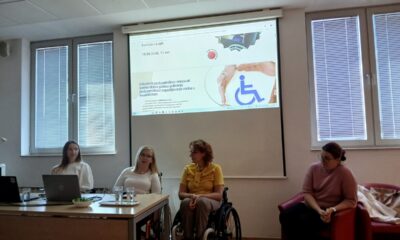
RASPRAVA Prepreke pri (samo)zapošljavanju osoba s invaliditetom
-
 VijestiPrije 4 dana
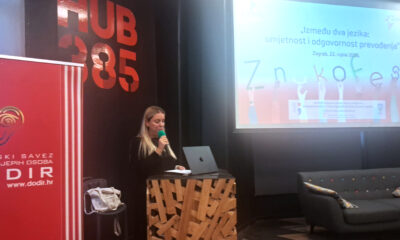
ZNAKOFEST Prevoditelji moraju biti otporni i emocionalno stabilni