
Disability digest
MY STORY Mario Bebek


The key components for a successful life are will, effort, desire, faith in oneself and in God. It’s your turn to determine the direction of movement. Don’t worry if you’re fooling around. Don’t worry if you don’t realize you’re a fool, says Mario, a famous motivational speaker with disabilities
Mario Bebek was born on October 28, 1991 in Zagreb with the rare disease Arthrogryposis multiplex congenita. In translation, it is a limitation in movements.
This disease includes the upper and lower extremities. In rare cases, only the upper extremities, so Mario only has problems with his arms. He was diagnosed with gastroschisis at birth and complications arise. The doctor’s prognosis was that he would not survive, so he was baptized the next day. He spent three months in the incubator. At the age of three, he went to America for an examination and received a recommendation for physical therapy and surgery.
– Upon my return, my parents provided me with physical therapy, which I received five times a week. I started kindergarten and there I adapted well with the other children, and I had exercises for my hands. That helped me a lot and I felt accepted. In addition to the physical therapy at home, mom exercised with me several times every day. I was constantly going for examinations and treatment – says Mario about the first years of his life.
The first encounter with insults made Mario stronger.
– I started elementary school according to the regular program, although my parents worked hard for me to be enrolled according to the regular program. It was there that I encountered insults for the first time, but later I got used to the fact that I am ‘different’ and that there will always be that. During elementary school, I started swimming in a competitive program. It was a club for disabled people only. I participated in numerous competitions. It helped me a lot to become independent and develop.
It was another additional therapy for me. In fact since then I have been completely busy with commitments. School in the morning, physical therapy, swimming, exercising again with mom. I had no free time for myself. My parents and brother were a great support for me to get through it all. I am very grateful to them for that. In the first place, to the parents who fought for their child. My every success is theirs, and so is my failure. Pain and struggle all the time, but will, effort, desire, faith in yourself and in God together with a positive attitude give you a goal. That’s my recipe for survival.
I’m trying to turn a minus into a plus. Really anything is possible when you want. I must not forget my friends who were always there for me and helped me when I needed it – says Mario, who today gives motivational lectures outside Croatia.
– In high school, it was much easier in terms of accepting myself and being quite understanding of my uniqueness. I graduated as a sanitary technician and, with the help of professors and colleagues, overcame the obstacles in the laboratory. After that, I entered the Health Polytechnic to become a sanitary engineer, I completed psychological and pedagogical education as a lecturer at the Teacher Training College, and I am currently in the Specialist Study for a graduate sanitary engineer.
I am very satisfied with the attitude of my colleagues and professors towards me – says Bebek, who once listened to comments like: ‘God punished you for having such hands’, ‘how are you not ashamed to walk with such hands’, ‘how is your mother not ashamed for giving birth to you like that?’
– I also did an internship at the Public Health Training Institute of Dr. Andrija Štampar and I did great. I would like to work on the same in the future. My desire is to work on health promotion and to deal with bioethics. I also want to make people aware of the principle of subsidiarity. The principle of subsidiarity is primarily a rule for determining jurisdiction in the realization of common property.
What an individual can do on his own, society must not take from him, or what a smaller community can do, a larger society must not deny it. Subsidiarity or assistance. Society must provide support. An individual should strive to the maximum within the limits of his capabilities. The new definition of Bioethics tells us that it is love for life. I am currently engaged in motivational lectures.
I sensitize the public about the life of people with disabilities. I tell my life story and try to motivate people, so that they don’t think that their problem is the most difficult and that they don’t underestimate their abilities. Life is a puzzle that a person puts together for years – says Mario.
Finally, Mario wrote a few motivational lines to our readers:
– The key components for a successful life are will, effort, desire, faith in oneself and in God. It seems that there is one direction, one path, one direction, one path, one diagonal, but there is only one life with countless directions, paths, directions, paths. It’s your turn to determine the direction of movement.
Don’t worry if you’re fooling around. Worry if you don’t realize you’re a fool. Even the best make mistakes. Follow your heart, but check yourself a hundred times when you intend to do something. Be wise and don’t run in front of the bully. It could cost you. Just remember, life is too short to be wandering all the time.
Wake up from your sleep, because you will sleep when you die. Now is the time to open your eyes and choose the path. Choose your path carefully. I always have a solution for everything. When they touch me and talk to me, I just turn my head and smile and move on to new victories. Where my heart desires.
There will always be obstacles, some are easier, some are more difficult, but it is important that you overcome them. If there is a problem, there is a solution. And when there are a lot of obstacles on your way, it means that you are worth it and that’s the only way to get stronger. Later, when you get stronger, just a smile on your face will be enough to win some things.
Remember, after the rain the sun always comes, but you have to work hard for that sun to be able to enjoy it. Even the sun should be earned. Believe me, you will thank yourself later. Life is made up of both good and bad things, and the bad things warn us that we have gone astray. Life is a fight with windmills, life is a labyrinth from which only the persistent win.
Every problem is a problem, we think we can’t get rid of it. If we think like that, then we will never find a solution. We must first admit to ourselves that I have such and such a problem and we must find a solution. We must know that there is always a bigger problem. If there were no problems, nothing would work. In a way, these problems are our guideposts and life guidelines. Let’s stay on the ball and not go astray.
There’s nothing wrong with being annoyed, except that it can be worse for you. God gave us a brain to think, so we should think about that problem and try to find a solution. Life is a labyrinth with many dead ends, we need to find a way out. Those dead ends are also problems. Each of us wanders into the dead end of life, but we should not give up immediately, but we should find an exit to the main road and choose the right path! Be the master of your will, and the servant of your conscience! There is always a way out.
While writing the book of your life…. don’t let someone else hold your pencil. No encounter with any person is accidental. Every person has a message that they carry. That message is either his appearance, his behavior… When something bothers you, take the freedom and peace to think about everything, gather your strength and move on. Because life is like a circle. Everything goes in a circle, but you must not fall out of that circle. The only solution for that is strong faith – says Bebek.


People with disabilities often have significantly greater electricity needs than other citizens across the European Union
Listen to the article
Energy poverty is affecting a growing number of households across the European Union, and recent research shows that it has a disproportionate impact on people with disabilities. The reasons for this disparity are numerous and extend well beyond financial hardship alone.
People with disabilities generally have higher electricity needs because many rely on medical equipment and assistive devices. They also tend to consume more energy for heating and cooling their homes, particularly people with physical disabilities whose health and well-being often depend on maintaining stable indoor temperatures.
To help address the growing problem of energy poverty, the European Network on Independent Living (ENIL), together with partners in the ASSERT project, has launched an online learning platform for professionals working with households affected by energy poverty.
The ASSERT platform has been developed primarily for organisations representing people with disabilities, social workers, energy advisers, healthcare professionals and other specialists who need additional knowledge and practical skills to tackle energy poverty more effectively.
In addition to professional training, the platform provides people with disabilities with practical advice and guidance on avoiding energy poverty, managing household energy costs and making more efficient use of energy systems.
More information is available on the ASSERT website at assert.aisforacademy.eu. Registration is free and open to organisations and professionals interested in strengthening the capacity of people with disabilities to respond more effectively to energy poverty.
ASSERT is a relatively new European project funded through the LIFE Programme. Over the past year and a half, it has been working to ensure that people with disabilities are not left behind in Europe’s transition to clean energy. The project currently operates in five European Union member states—Cyprus, France, Greece, Italy and Spain—and brings together experts from a wide range of fields, including disability rights and energy efficiency.

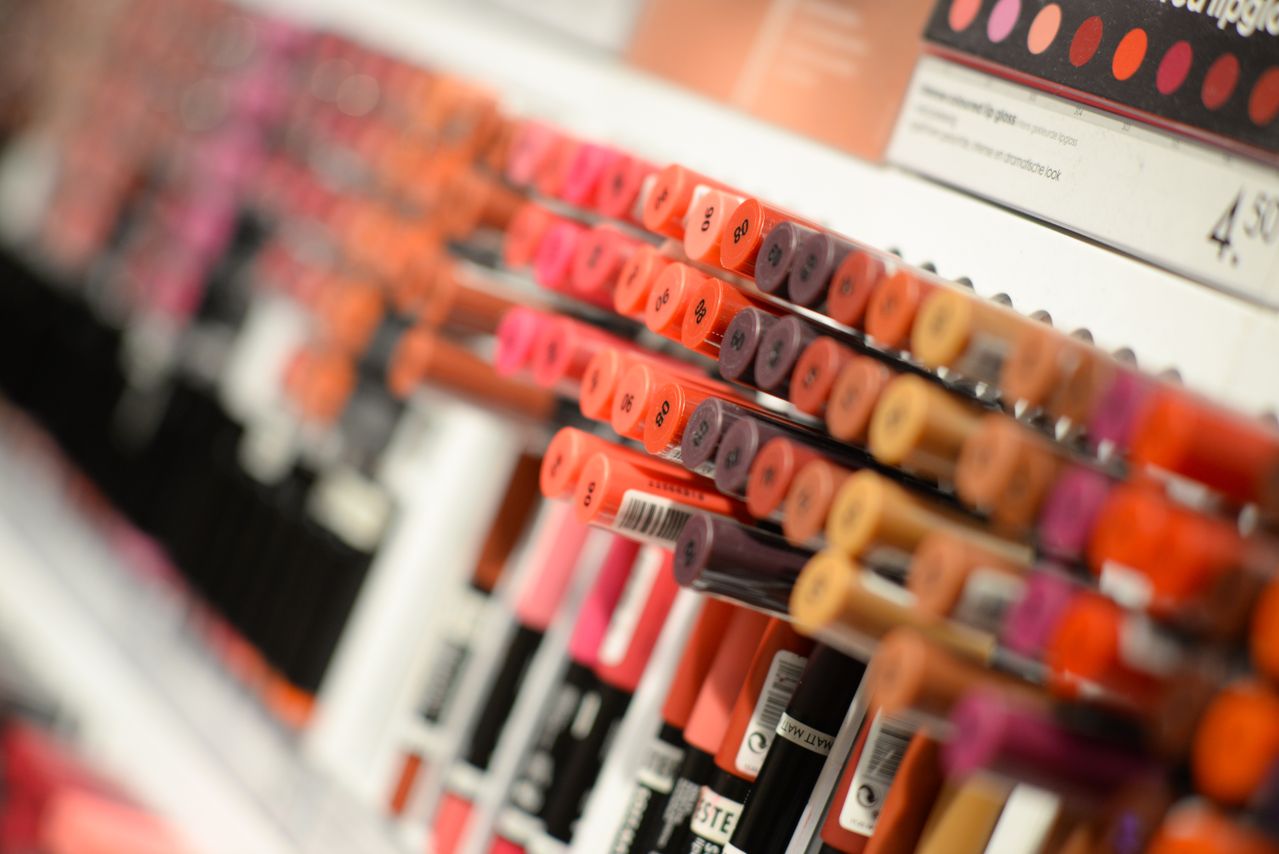
Global beauty retailer Sephora has introduced a ‘Quiet Hours’ programme across its stores worldwide, aiming to create a more comfortable and accessible shopping experience for neurodivergent people and anyone who prefers a calmer retail environment
Listen to the article
The initiative is the first global programme of its kind in the beauty retail sector. During designated Quiet Hours, stores will lower the volume of in-store music, adjust digital displays to reduce visual stimulation and, where possible, minimise the presence of strong fragrances. At selected locations, customers will also have access to additional options, such as mobile checkout, making the shopping experience simpler and less stressful.
The programme was developed in partnership with Open Inclusion and Purposeful Futures, with direct input from neurodivergent customers and employees whose experiences helped shape the initiative.
Before its global rollout, Sephora tested the programme in 32 stores across eight markets. The pilot project found that the majority of neurodivergent customers believed Quiet Hours significantly improved their shopping experience. In addition, 90% of all surveyed customers said the initiative made stores more inclusive and welcoming for everyone.
Experts involved in developing the programme note that people with autism, ADHD and other sensory issues often find shopping centres highly challenging environments because of loud music, bright lighting, strong fragrances and large crowds. Even relatively small adjustments, they say, can substantially reduce sensory overload and make shopping a more comfortable and independent experience.
The initiative has also received positive feedback from employees, who report that the calmer environment enables better communication with customers and reduces stress throughout the working day.
By introducing Quiet Hours, Sephora joins a growing number of major retailers offering sensory-friendly shopping periods. Similar initiatives have been adopted in recent years by supermarkets, department stores and cinemas, reflecting a broader understanding that accessibility is not only about removing physical barriers but also about creating environments where people with sensory sensitivities can feel safe, comfortable and included.
Sephora says Quiet Hours represent just one step towards creating a more inclusive shopping experience and has pledged to continue working with the neurodivergent community to develop solutions that meet the needs of an even wider range of customers.

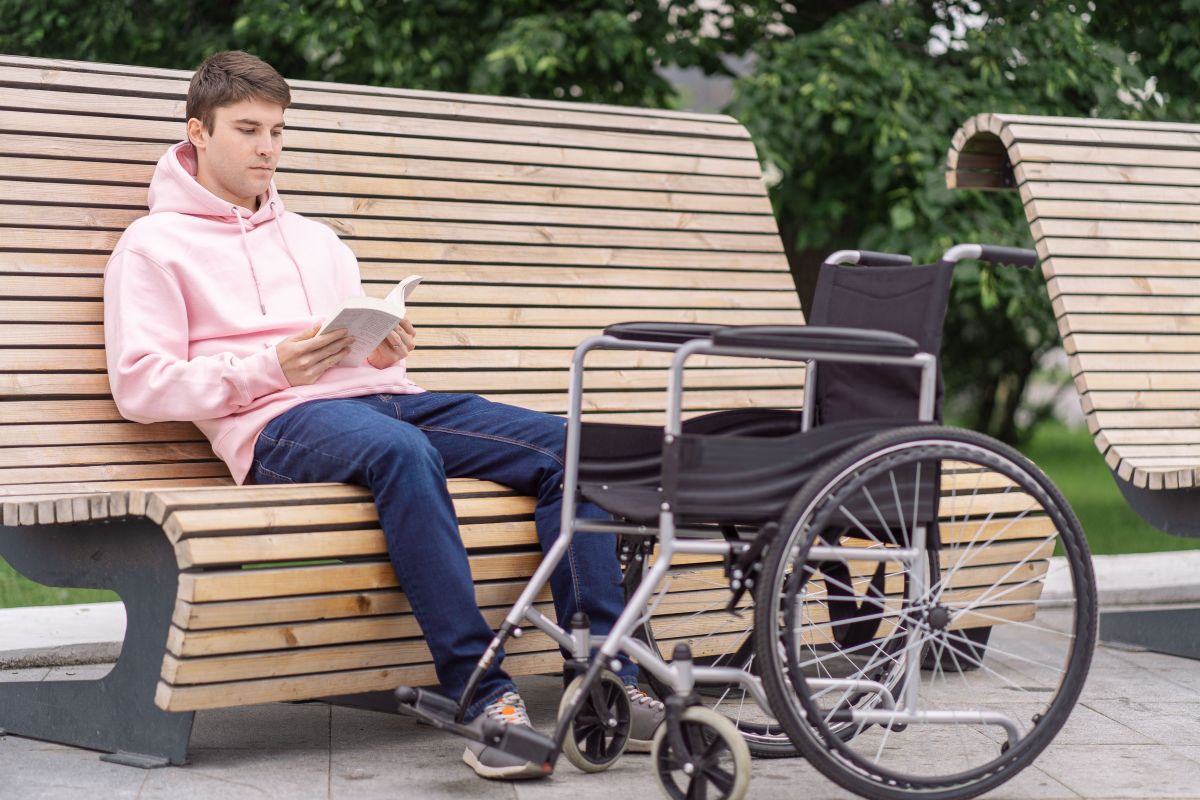
Without young people with disabilities in newsrooms, government ministries and national parliaments, the slogan “Nothing About Us Without Us” remains just that—a slogan, a decorative phrase displayed on banners at disability rights marches.
Listen to the article
Consider for yourself to what extent young people with disabilities in the European Union truly enjoy their rights, and whether those rights are fully realised or remain largely declarative—a polished façade of the welfare state with deep cracks beneath the surface.
One answer to these questions can be found in a survey conducted last year by the Youth Committee of the European Disability Forum (EDF). The survey gathered responses from 183 young people with disabilities across all EU member states. Its findings were published in the EDF manifesto on the everyday lives of young people with disabilities, entitled The Right to Shape Our Future.
The survey results should serve as a wake-up call for decision-makers across the European Union. Respondents expressed dissatisfaction with every major aspect of social life. Overall, young people with disabilities said they do not enjoy the right to live in a fair and accessible society. They also reported that their opportunities to shape their own futures and participate in decisions affecting their lives are significantly restricted.
When it comes to influencing society, respondents said that the media either ignore their lives and rights altogether or portray them through stereotypes. Even when useful information is available, it is often presented in formats that remain inaccessible to people with disabilities.
Without young people with disabilities working in media organisations, government ministries and national parliaments, the slogan “Nothing About Us Without Us” risks remaining exactly that—a slogan, a symbolic message carried on banners rather than reflected in public policy and everyday decision-making.
Young respondents were equally critical when asked about accessibility, which the manifesto describes as little more than “a decent proposal” rather than a lived reality.
“People with disabilities face a ‘disability tax’—they pay more for housing, transport and healthcare while navigating a world that was not designed with them in mind. From inaccessible bus stops to cafés that cannot be entered, the built environment continues to undermine independence. True equality requires infrastructure that anticipates diversity rather than treating it as an afterthought,” the manifesto states.
For many young people with disabilities, the right to shape their own future is further limited by segregated education systems that prevent them from reaching their full potential. This, the manifesto argues, contributes to a “poverty trap.”
By the time they complete their education, many are not adequately prepared to compete in the labour market, while the jobs they do obtain often provide only enough income to meet their basic needs.
At the same time, earning an income can result in the loss of essential social support, effectively penalising ambition and trapping many young people with disabilities in poverty, the EDF manifesto concludes.
Tko su Purger i Purgerica?




Smije li Gluha osoba dobiti informaciju koju svi ostali mogu čuti?

Besplatne zdravstvene provjere na glavnom zagrebačkom trgu

Osobni asistenti traže veće plaće i uključivanje u reformu


-
 In MetropolaPrije 6 dana
DUMOVEC Zagrebački umirovljenici i njihovi novi prijatelji psi
-

 VijestiPrije 5 dana
Naknada za prijelazno razdoblje usluge osobne asistencije
-

 EU kutakPrije 4 dana
Osobe s invaliditetom isključene iz hitnih službi i komunikacije
-
 VijestiPrije 3 dana
Osobni asistenti traže veće plaće i uključivanje u reformu
-
 In MetropolaPrije 7 dana
SAMO 5 MINUTA Oštra poruka Zajednice spinalno ozlijeđenih
-
 Civilno društvoPrije 7 dana
URIHO sudjelovao u Europskom tjednu mobilnosti
-
 in MREŽAPrije 7 dana
RASPRAVA Prepreke pri (samo)zapošljavanju osoba s invaliditetom
-
 VijestiPrije 5 dana
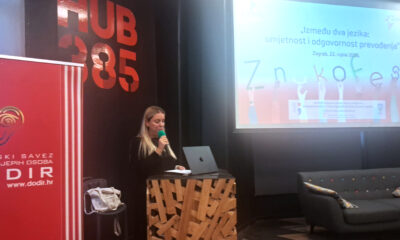
ZNAKOFEST Prevoditelji moraju biti otporni i emocionalno stabilni