
Purger and Purgerica
A School of Dance and Etiquette in Zagreb




We explore what social life was like in the past, when balls were the main form of social gathering. They were places where people presented themselves, met one another, and socialized. Unlike today’s social events, these occasions were far more complex. Everything had its purpose and its proper place.
Listen to the article
In the 19th and early 20th centuries, dance balls in Zagreb were key social events. Newspapers devoted lengthy articles to them, and dance was both a fashion and an essential social skill. Balls were organized to mark important celebrations or cultural events, and the dance school served as a place where young ladies and gentlemen prepared to appear at balls with polished dancing skills and refined manners.
The First Dance School in Zagreb
The first dance school in Zagreb was founded by the Italian ballet artist Pietro Coronelli. He arrived in Zagreb in 1859 at the invitation of Count Ambroz Vranyczany, in order to teach dance to his daughter Clotilda. Soon after his arrival, Coronelli established a permanent dance school that offered instruction in both dance and etiquette for the city’s citizens. The first advertised announcement of his school appeared in the newspapers in 1860.
The first private school of dance and etiquette in Zagreb began operating in the palace of Ambroz Vranyczany at 2 Jelačić Square. The school later moved to the old shooting range at Tuškanac, and its last known location was at 2 King Tomislav Square. In addition to these venues, 19th-century Zagreb had various spaces for dancing, ranging from private palaces and social salons to large public halls such as Stanković’s Theatre (today the seat of the Zagreb City Assembly) and the Narodni dom at 18 Opatička Street.
What Did One Have to Learn?
The classical dances that were taught and performed most often included the Viennese waltz, the English waltz, the polka, and the mazurka. These dances formed part of the standard repertoire of dance education and social events, symbolizing elegance and refinement.
In addition to dance, one also had to learn proper etiquette. This encompassed everything that enabled a person to move, communicate, and dance in public with dignity, self-control, and social acceptance. Correct posture was essential, as were the manner of walking through a salon, entering a ballroom, and moving among guests. One learned how to sit, stand, and turn—always without sudden or improper movements. Everything was precisely prescribed: how a gentleman invited a lady to dance, how an invitation was accepted or declined, the order of dances and respect for the dance card, conversation during the dance, and the avoidance of excessive closeness, leaning in, or loud laughter. In short, everything was meant to be discreet, calm, and measured.
Zagreb and Viennese balls
If we compare Viennese and Zagreb balls of that era, we can say that traditional Viennese balls are known for their highly formal etiquette, marathon waltzing, and ceremonial openings with strictly synchronized choreography, often held in grand halls. Zagreb balls, by contrast, were social events shaped by local customs, closely tied to the city’s cultural and civic life, and not necessarily as formal or as grandiose as their Viennese counterparts.
In essence, the Zagreb ball was a place for social networking, a ritual of young people’s entry into society, and a marker of belonging to European bourgeois culture.
After Coronelli’s death in 1902, the dance school continued to operate under the leadership of his daughters, Elvira and Bianca, until around 1970.


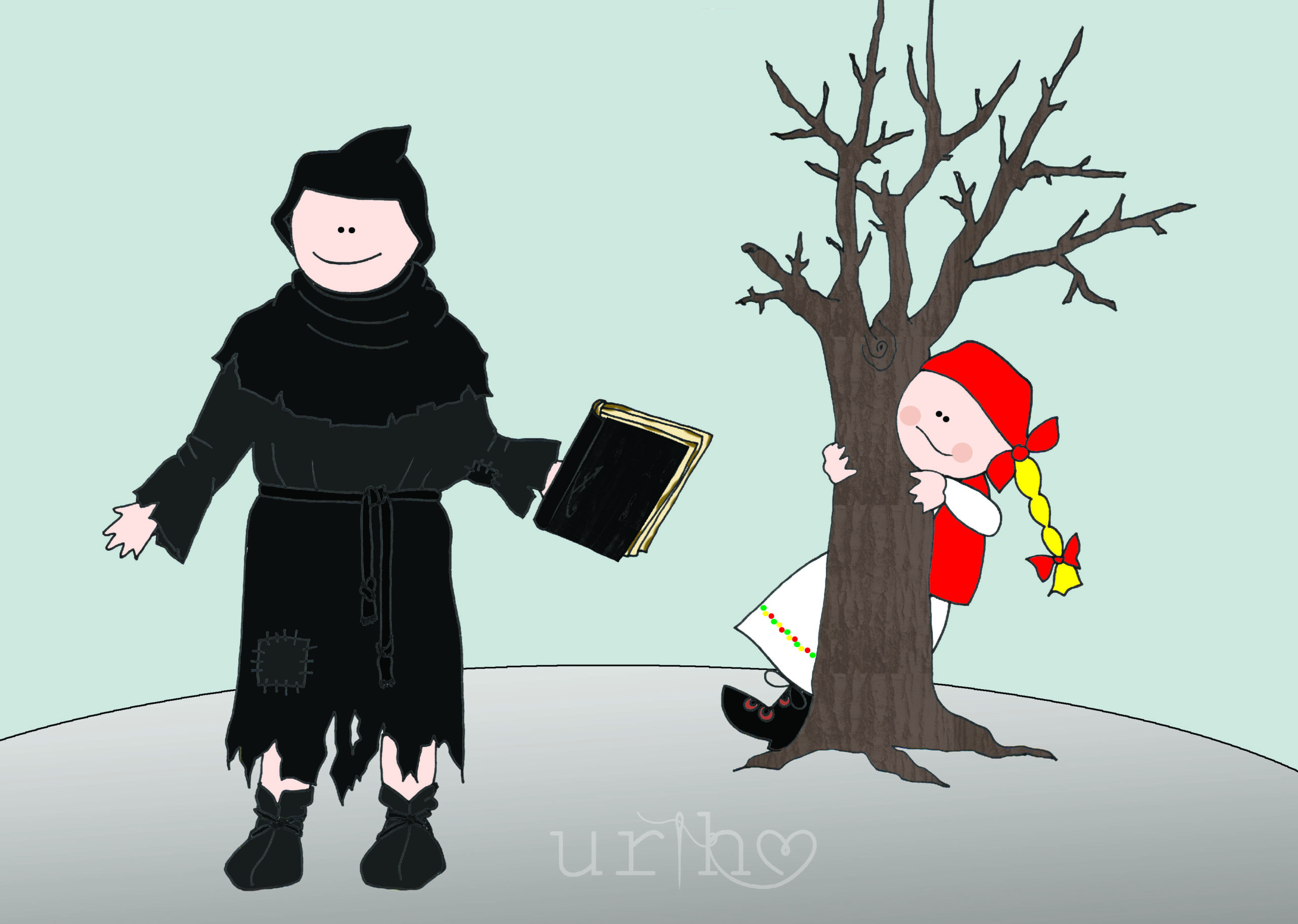
The expression “Zagreb’s Black School” (Črna škola in the local Kajkavian dialect) is the legendary folk name for Zagreb’s first seminary on Kaptol. Although the seminary was simply a place of education with no connection to magic, popular superstition and widespread illiteracy gave rise to stories that linked it with sorcery—and, above all, with the mysterious Thirteenth Year.
Listen to the article
The name “Black School” most likely originated from the black cassocks worn by its students. Their distinctive dark robes made such an impression on local people that the seminary itself became known as the Black School.
Another legend connected with the name concerns Franjo Filipović, a canon who converted to Islam after being captured by the Ottomans during the sixteenth century. He subsequently became known as Mehmed-beg Filipović. According to local tradition, when Bishop Juraj Drašković heard of his conversion, he cursed him and ordered his house to be painted black. The building was later converted into a seminary, but the popular name “Black School” remained.
According to folklore, however, the Black School was no ordinary seminary. It was believed to conceal a secret Thirteenth Year reserved for apprentices in the dark arts. In Croatian and neighbouring folk traditions, those who completed this mysterious final year became known as grabancijaši—literally, the students of the Black School.
The Thirteenth Year and the Devil’s Bargain
Ordinary priestly education was believed to last twelve years. Yet those who wished to master supernatural powers and black magic were said to enrol secretly in a hidden thirteenth year.
Some traditions claimed that these lessons took place underground in complete darkness, or within secret chambers hidden inside the Black School itself, where students spent years without ever seeing daylight. According to popular belief, the true teacher was none other than the Devil, while other versions speak of mysterious supernatural beings who taught their pupils the language of animals, magical spells, fortune-telling, and the ability to command storms.
Completing the Thirteenth Year transformed a student into a fully fledged grabancijaš. Yet this graduation came at a terrible cost. At the end of their studies, the Devil would claim one graduate to remain in his service—according to some stories by drawing lots—while the others were allowed to leave with their newly acquired magical powers.
The Powers of a Grabancijaš
Those who survived the Thirteenth Year were believed to possess extraordinary abilities. They could summon, calm, awaken or even ride a winged dragon using magical words. They were said to control storm clouds, hail and thunder, and to travel the world carrying a single enchanted book filled with powerful spells.
People believed that a grabancijaš could always be recognised by his appearance and unusual habits. His clothes were typically torn and shabby, and he carried nothing except a bag containing one remarkably thick magical book. Whenever he entered a village, he would ask only for fresh milk or kajmak (a traditional dairy delicacy similar to clotted cream). He avoided looking people directly in the eye, rarely spoke, and when he did, he muttered incomprehensible words in Latin.
Some regions even believed that grabancijaši were born with unusual physical features, such as a tiny tail or double rows of teeth.
Villagers feared them greatly. They usually gave them whatever they requested, believing that refusal would bring disaster upon their crops.
Masters of Storms
If a grabancijaš was offended—for example, if someone refused him milk—or if the Devil commanded him to mount his dragon among the clouds, violent storms and devastating hail would soon follow.
To defend themselves, people developed an entire repertoire of protective rituals. Church bells were rung, blessed candles lit, and counter-magic was performed by benevolent witches and folk healers.
One of the best-known customs involved carrying the household dining table into the courtyard. A loaf of bread and a bowl of salt were placed upon it, while an axe was driven into the ground in front of the table with its blade pointing towards the sky. The axe was believed to symbolically slice through the storm clouds and break the grabancijaš’s magical power.
A Legend with European Roots
This remarkable tradition is even more fascinating when viewed in its wider European context. Similar legendary figures appear across Central and Eastern Europe: the grabancijaš in Croatia and Hungary, the solomonari in Romania, and the črnošolci (“black-school students”) in Slovenia.
Historians and ethnologists generally agree that these legends probably reflect a very real medieval phenomenon. During the Middle Ages and the Renaissance, students from Croatia travelled to Europe’s great universities, including Bologna, Padua, Vienna and Prague.
When these young scholars eventually returned to their isolated rural communities, they brought with them heavy Latin books, unfamiliar scientific knowledge, strange vocabulary, and the ability to make educated predictions about the weather through astronomy and natural philosophy. After long journeys, they often appeared poor, exhausted and untidy.
To largely illiterate villagers, such learned travellers—with mysterious books written in an incomprehensible language—could only be graduates of the secret Thirteenth Year, men who had learned to command dragons and storms.
The legend became so deeply embedded in the folklore of north-western Croatia that it eventually entered Croatian literature. In 1804, the celebrated playwright Tituš Brezovački based his famous comedy Matijaš Grabancijaš Dijak on the legend. Its clever protagonist is precisely such a “graduate” of the Black School, using his supposed magical knowledge to outwit the superstitious people he encounters.
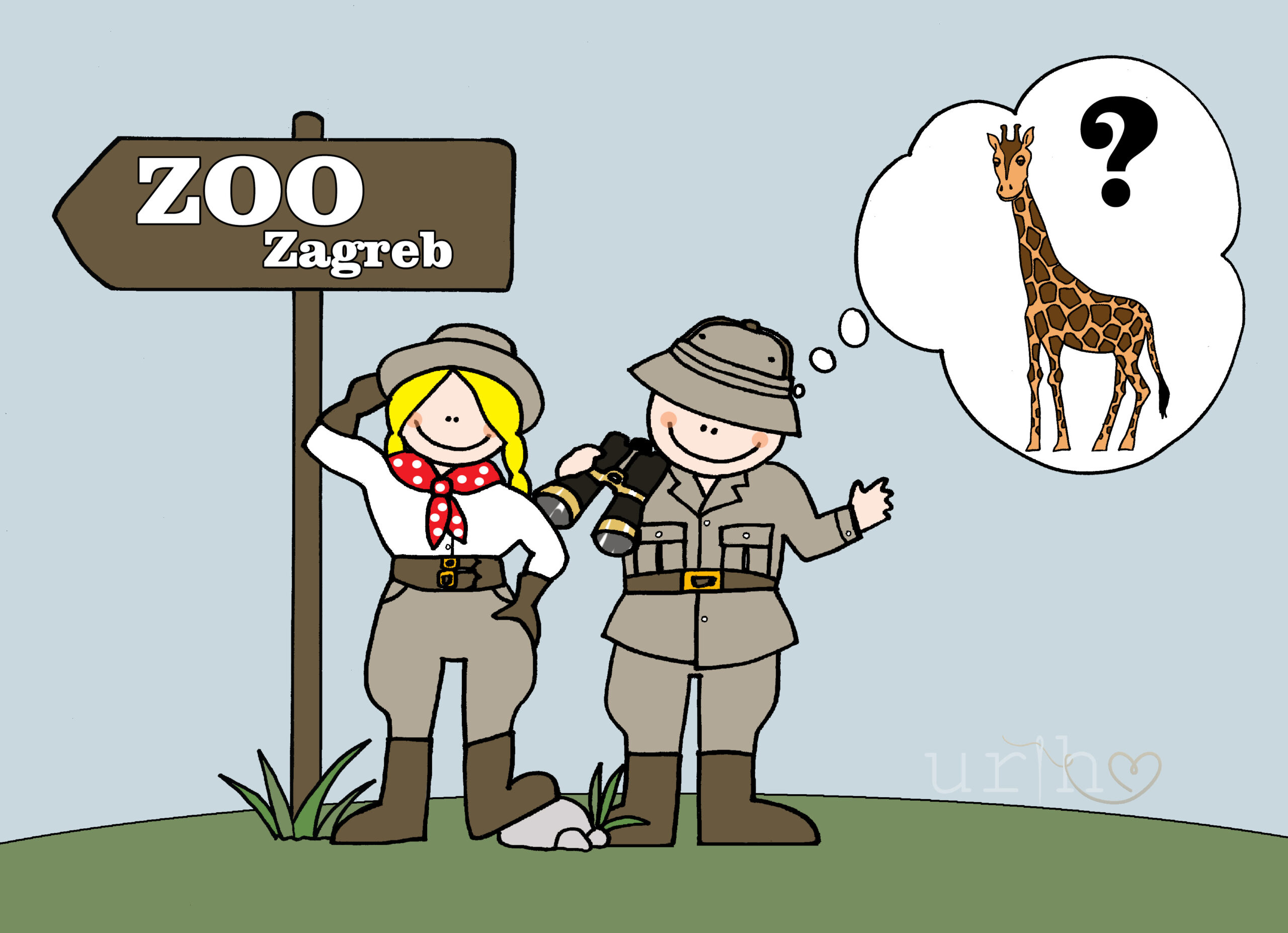
Zagreb Zoo has one of the most romantic stories of how it came into being, and it all began with one man’s vision and just three animals.
Listen to the article
The Zoo is located in Maksimir Park, which was named after Zagreb Bishop Maksimilijan Vrhovac. The name Maksimir was coined from the phrase ‘Maksimilijanov mir’ (‘Maksimilijan’s peace’), symbolising the bishop’s wish to give the citizens a place to relax and enjoy nature on the site of what had once been the old episcopal forest.
The entire project to build the Zoo was not initiated by the state or a scientific institute, but by the sheer passion of one individual. Mijo Filipović was not a zoologist by profession, but a nature enthusiast who had spent years dreaming of giving Zagreb a window onto the wild. His enthusiasm was so infectious that he managed to get the whole city behind the idea at a time when there were far greater problems to deal with.
It all began on 27 June 1925, when Mijo Filipović, then director of a construction company, managed to convince the then Mayor of Zagreb, Vjekoslav Heinzel, that Zagreb, as a modern European metropolis, needed a zoo. Filipović insisted that the Zoo should be located within Maksimir Park because he wanted it to be more than just a place to look at animals – he wanted it to be a place for science and education. At the time, it was known as the ‘Zoological Museum’.
The Zoo’s first ‘residents’ were not exotic lions or elephants, but three foxes and two polar bears which Mijo Filipović received as a gift. They were housed on a small island in the middle of Maksimir Lake, which is still known today as Swan Island.
Between 1925 and 1926, the Zoo expanded at an astonishing pace. At first, it was not stocked by buying animals; instead, they were donated by citizens. People brought in injured birds, deer they had found, or unusual animals they had acquired while travelling. This created a strong emotional bond between Zagreb’s residents and the Zoo – it was literally ‘theirs’.
In the 1930s, some of the most recognisable structures that still stand today were built. The best known is Lion Bridge, with its lion statues, along with the towers that resemble castles, giving the Zoo a fairytale-like, ‘old Zagreb’ character. A special enclosure for monkeys was soon built as well, and they immediately became the Zoo’s biggest stars. An elephant also arrived during this period, becoming a real attraction.
The Zoo survived the Second World War, but by the end of the 20th century it was in very poor condition, with enclosures that were far too small. Major modernisation did not begin until the 2000s, when the cages were replaced with spacious enclosures designed to imitate the animals’ natural habitats.
The Case of the Zagreb Giraffe
One of the city’s great mysteries is why so many Zagreb residents insist that they saw a giraffe at the Zoo as children. Some remember seeing one, while for others it would have been impossible.
Since its foundation, the Zoo has kept detailed records of all its animals. Even today, its official website states under the ‘Questions and Answers’ section that the Zoo had a giraffe between 1955 and 1960. So after 1960, there was no giraffe at the Zoo. Yet the question remains: how did generations of children later remember seeing a giraffe that was no longer there?
Experts explain this through a phenomenon known as the Mandela Effect in a local context – a situation in which a large number of people share the same, highly specific, but incorrect memory. Experts suggest that there may have been confusion with camels or llamas, as camels and llamas lived for years in the old part of the Zoo, near the entrance. From a child’s perspective, these long-necked animals may have seemed ‘enormous’, and over the years that childhood memory could have transformed into the image of a giraffe.
There is also the influence of collective suggestion. When someone in a position of authority – a parent or an older brother or sister – says, ‘Do you remember how we saw the giraffe here?’, a child’s brain may create a false visual image to fill in the missing information.
The explanation may also be generational. Parents or older brothers and sisters may genuinely have seen a giraffe, while younger members of the family only heard about it.
Furthermore, most children’s ‘Zoo’ toy sets or picture books featured drawings of giraffes as a universal symbol of the zoo, which the brain could later associate with an actual visit.
Today, Zagreb Zoo – or the Wild Heart of the City, as we like to call it – has a historic reputation as the oldest zoo in south-eastern Europe. It ranks among the leading destinations for wildlife lovers in this part of Europe and remains Zagreb’s most popular destination for family walks.
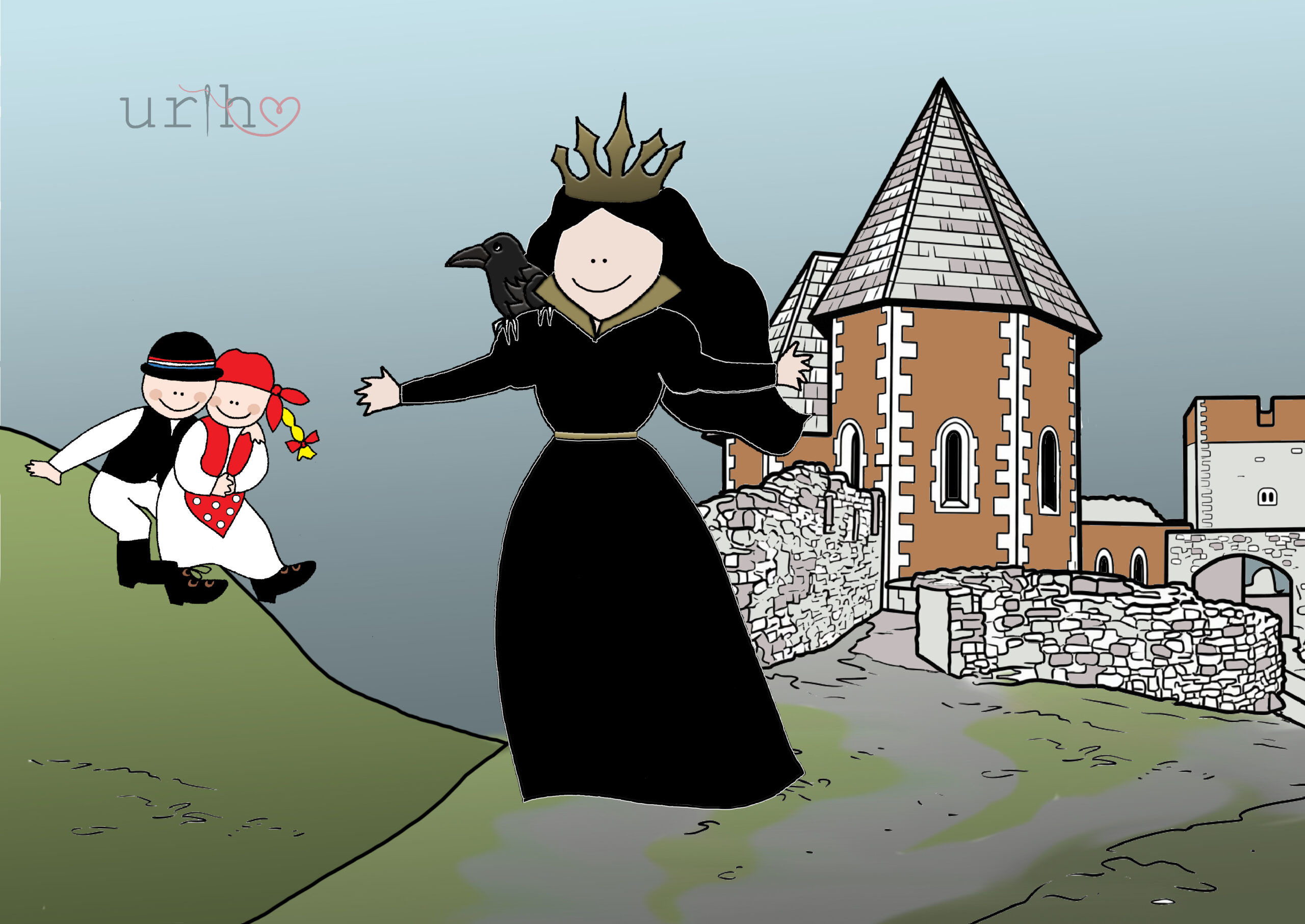
The story of Medvedgrad begins in 1242, when the Mongols swept into Croatia, laying waste to the settlements of Gradec and Kaptol. King Béla IV of Hungary and Croatia narrowly escaped capture, and once the invaders had withdrawn, it became clear that Zagreb needed a powerful fortress to protect the bishop, Kaptol and the Church’s treasures from any future attacks.
Listen to the article
Construction of Medvedgrad began between 1249 and 1254 under the direction of Philip, Bishop of Zagreb, with the support of Pope Innocent IV and King Béla IV. Perched almost 600 metres above sea level on the slopes of Mount Medvednica, the fortress commanded the approaches to Zagreb as well as the important routes leading towards Slavonia and Turopolje.
Few medieval castles changed hands as often as Medvedgrad. Over the course of more than three centuries, it is believed to have had around 150 owners. Among them were the Bishops of Zagreb, King Béla IV, Sigismund of Luxembourg, Matthias Corvinus, and the powerful noble families of Babonić, Cilli (Celje), Zrinski and Erdődy.
These frequent transfers of ownership explain why Medvedgrad appears so regularly in medieval charters and political disputes.
The Legend of the Black Queen
No story about Medvedgrad is more famous than that of the Black Queen.
The legend is linked to Barbara of Cilli, the wife of Sigismund of Luxembourg. Yet there is no historical evidence that Barbara ever lived at Medvedgrad or that she was known as the Black Queen. The legendary figure emerged over centuries as the real queen became intertwined with local folklore passed down from generation to generation.
According to the legend, the Black Queen was extraordinarily wealthy, strikingly beautiful and notoriously cruel. The people living beneath Mount Medvednica feared her, believing she imposed crushing taxes and mercilessly punished anyone who challenged her authority. Stories claimed that she practised witchcraft, conversed with ravens and concealed immense riches in the underground chambers of Medvedgrad.
The best-known tale recounts her final escape. As enemy forces surrounded the fortress, the Black Queen refused to surrender either herself or her treasure. She ordered her riches to be loaded onto a great black raven—or, in another version of the story, into a black carriage drawn by devils. Just as she attempted to flee, the earth opened beneath her, swallowing both the Queen and her treasure.
To this day, many believe that the treasure still lies hidden somewhere beneath Medvedgrad.
Legend also says that on stormy nights her ghost walks along the ancient walls, accompanied by the rattling of chains and the harsh cries of ravens. Only someone with a completely pure heart, it is said, will ever be able to discover her hidden treasure.
The legend of the Black Queen has become inseparable from Medvedgrad itself and remains one of the fortress’s most enduring symbols.
The Decline and Revival of Medvedgrad
As the Ottoman threat intensified, Medvedgrad was strengthened and refortified in 1487 and again in 1574. However, the devastating earthquake of 1590 left the fortress badly damaged. Its owners eventually moved to a more comfortable residence in nearby Šestine, and Medvedgrad was gradually abandoned. By the seventeenth century, it was already being described as a ruin.
The fortress remained in private ownership until the end of the Second World War, when the Kulmer family lost possession and Medvedgrad became state property. Systematic archaeological excavations and restoration work began in 1979, transforming the site into one of the best-preserved medieval fortresses in Croatia.
Medvedgrad Still Watches Over Zagreb
Just below the fortress’s southern defensive tower stands the Altar of the Homeland, created in 1994 by the Croatian sculptor Kuzma Kovačić.
The monument honours all Croatian defenders who gave their lives during the Croatian War of Independence. It is built from blocks of stone gathered from different parts of Croatia, symbolising the country’s diverse regions, while an eternal flame burns at its heart.
Its location is no coincidence. For almost eight centuries Medvedgrad has watched over Zagreb from its commanding position above the city. The monument therefore creates a powerful symbolic link between Croatia’s medieval heritage and the modern Croatian state.
Tko su Purger i Purgerica?





Za inkluzivni dodatak nije važna samo dijagnoza

Održan sedmi online okrugli stol o digitalnoj pristupačnosti

Franko ostvario zapažen rezultat na Svjetskom prvenstvu


-

 VijestiPrije 7 dana
Naknada za prijelazno razdoblje usluge osobne asistencije
-

 EU kutakPrije 6 dana
Osobe s invaliditetom isključene iz hitnih službi i komunikacije
-

 VijestiPrije 5 dana
Osobni asistenti traže veće plaće i uključivanje u reformu
-
 in MREŽAPrije 21 sat
Za inkluzivni dodatak nije važna samo dijagnoza
-

 VijestiPrije 7 dana
ZNAKOFEST Prevoditelji moraju biti otporni i emocionalno stabilni
-

 Video / podcastPrije 2 dana
Smije li Gluha osoba dobiti informaciju koju svi ostali mogu čuti?
-
 Osobe s invaliditetomPrije 21 sat
Održan sedmi online okrugli stol o digitalnoj pristupačnosti
-

 In MetropolaPrije 5 dana
Besplatne zdravstvene provjere na glavnom zagrebačkom trgu