The new programme represents the first step towards the systematic inclusion of blind and partially sighted people, as well as Deaf and hard of hearing people, in the regular film programme of Tuškanac Cinema
Listen to the article
On 2 July, the Croatian Film Association launched a new programme entitled Without Barriers, making selected film titles accessible for the first time to blind and partially sighted people, as well as Deaf and hard of hearing people. The programme is aimed at removing sensory and social barriers and creating conditions in which the cinema experience becomes accessible to a broad and diverse audience.
The first screening within the programme took place on 2 July at 9 p.m. at the Cultural Information Centre (KIC). On that occasion, the modernist classic The Birch Tree (Breza, 1967), directed by Ante Babaja, was screened with audio description for blind and partially sighted audiences and standardised subtitles for Deaf and hard of hearing audiences. Admission to the screening was free.
Based on the novella of the same name by Slavko Kolar, The Birch Tree tells the moving story of Janica, a gentle village girl whose life is tragically destroyed by primitive living conditions and the harshness of human relationships. The film is distinguished by the powerful performances of Fabijan Šovagović and Velimir “Bata” Živojinović, as well as the understated appearance of Slovenian model Manca Košir. At the 1967 Pula Film Festival, it received the Silver Arena, the Golden Arena for Best Actor, awarded to Bata Živojinović, and the award for cinematography, presented to Tomislav Pinter.
By introducing the Without Barriers programme, the Croatian Film Association continues its long-standing efforts to develop audiences and ensure access to film content for different groups of viewers. For the past ten years, the Association has organised a Sensory Screenings programme intended for children with sensory disabilities and their families, making it one of the pioneers of this model of film exhibition in Croatia.
The new programme is a natural continuation of this work and the first step towards the systematic inclusion of blind and partially sighted people, as well as Deaf and hard of hearing people, in the regular film programme of Tuškanac Cinema.
The audio description for the films was produced by the Centre for Audio Description, a business specialising in the production and adaptation of audiovisual content owned by Antonio Pavlović, while the standardised subtitles for Deaf and hard of hearing audiences were prepared by the Zaželi Association.
The Croatian Film Association points out that the Without Barriers programme is part of the project Film Programmes Beyond Tuškanac Cinema: Audiences at the Centre, implemented with the support of the Ministry of Culture and Media of the Republic of Croatia.
– The Without Barriers programme is part of the Croatian Film Association’s project Film Programmes Beyond Tuškanac Cinema: Audiences at the Centre, implemented with the support of the Ministry of Culture and Media of the Republic of Croatia. Through the Tuškanac on Tour programme, we will gradually seek to include films with audio description for blind and partially sighted people and subtitles adapted for Deaf and hard of hearing people in our regular programme. The pace at which these screenings are introduced will depend on the availability of screening slots at the institutions we visit, as well as on the financial resources secured for the implementation of the programme. The next adapted screening is planned for the autumn, when we will present Rajko Grlić’s film Once Upon a Time There Was a Country (Samo jednom se ljubi). From 2027 onwards, our goal is to have at least one film per month in our regular programme adapted for blind and partially sighted people, as well as Deaf and hard of hearing people – the Croatian Film Association said.
Disability rights advocates are warning that the latest actions by U.S. President Donald Trump’s administration could undermine decades of progress toward inclusion and increase the risk of people with disabilities being placed back into institutional care
Listen to the article
The concerns stem from two recent decisions by the U.S. administration. The Department of Education has announced plans to transfer responsibility for special education to the Department of Health and Human Services, headed by Robert F. Kennedy Jr. Meanwhile, the Department of Justice has issued a new legal interpretation that could weaken the right of people with disabilities to live in the community.
According to disability rights advocates, these decisions mark a shift away from viewing people with disabilities as equal members of society and toward the so-called medical model of disability, which primarily regards disability as a condition to be treated or corrected.
Selene Almazan, Legal Director of the Council of Parent Attorneys and Advocates, described the moves as a direct attack on the right of people with disabilities to live lives comparable to those of people without disabilities.
Since the 1960s, the United States has gradually moved away from placing people with intellectual disabilities and mental illnesses in large institutions. A series of laws and court rulings has enabled children with disabilities to attend mainstream schools while allowing adults to live and work in their communities with appropriate support.
Particularly significant was the landmark 1999 U.S. Supreme Court decision in Olmstead v. L.C., which established that the unjustified segregation of people with disabilities constitutes discrimination. The ruling requires states to provide services in the most integrated setting appropriate, ensuring that people with disabilities have the opportunity to live, study, and work in the community whenever possible.
However, a new opinion issued by the Department of Justice’s Office of Legal Counsel argues that neither the Americans with Disabilities Act nor Section 504 of the Rehabilitation Act requires states to provide services in such integrated settings. Although the law itself has not changed, the new interpretation could influence how federal agencies enforce disability rights laws and encourage some states to reduce investment in community-based support services.
Additional concern has been raised by the transfer of special education responsibilities from the Department of Education to the Department of Health and Human Services. Organizations representing people with disabilities argue that education should not be treated as a medical issue but as a matter of equal opportunity and the fundamental right to education.
Criticism has also intensified because of previous statements made by Health and Human Services Secretary Robert F. Kennedy Jr. about autism. Kennedy has repeatedly made claims that contradict the scientific consensus, including suggesting a link between vaccines and autism and stating that people with autism would be unable to live independently or hold jobs.
Following widespread criticism, Kennedy clarified that he had been referring to people with the most severe forms of autism. Nevertheless, his remarks continue to fuel distrust among disability advocacy organizations.
Zoe Gross of the Autistic Self Advocacy Network emphasized that the special education system exists to help students with disabilities develop their abilities and reach their full potential. She questioned whether the new leadership would remain committed to fulfilling that mission.
Parents of children with disabilities have also voiced concern about the potential consequences. Lindsey Althaus of Ohio said that her 12-year-old son, who has autism and apraxia, attends school alongside his non-disabled peers and participates in everyday activities thanks to community-based support services. She fears that reducing states’ obligation to fund such programs could ultimately lead to their elimination.
Magda Nakassis of Maryland shared similar concerns. Her non-speaking son, who has autism, attends a public school where he takes part in inclusive educational programs alongside other students. She stressed that the right to education is not a medical issue but one of equality, dignity, and belonging.
Disability rights organizations conclude that the combination of changes to special education and the new interpretation of federal civil rights protections could pose the greatest challenge to inclusive disability policies in the United States in decades. They warn that people with disabilities could once again be pushed to the margins of society at a time when inclusion has become a widely accepted goal of modern democratic societies.
Accessibility for people with disabilities is now a legal requirement, but high-quality architecture does not end with meeting minimum regulations. The needs of people with disabilities should be considered from the very beginning of the design process, not only once a project has been completed
Listen to the article
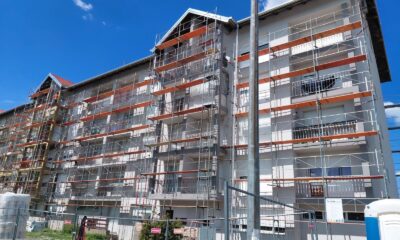
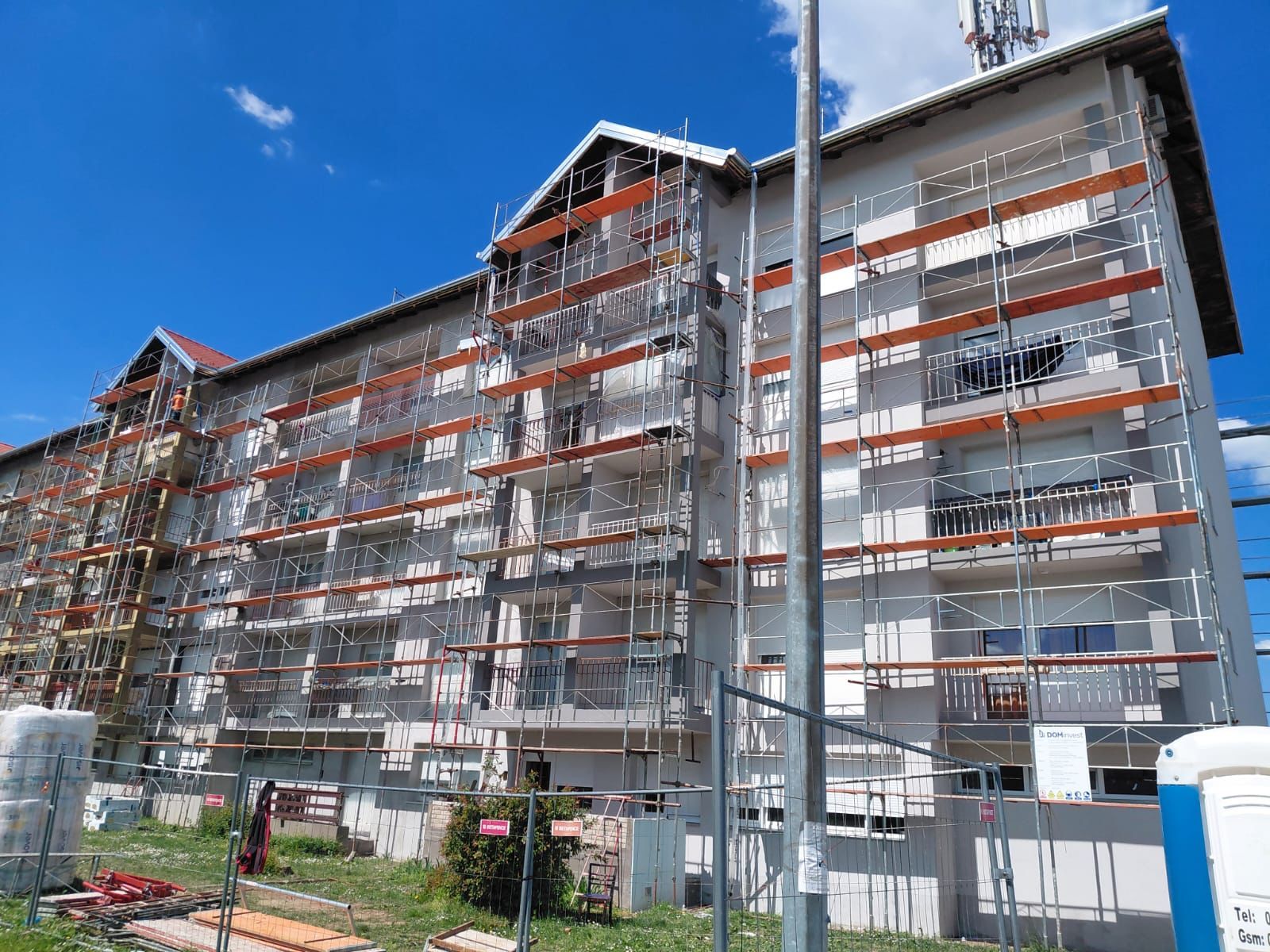
The contemporary appearance of Croatian cities is increasingly characterised by simple, almost identical residential buildings that many people refer to as ‘matchboxes’. This trend raises the question of whether modern architecture has lost its creativity under economic pressure, and to what extent the quality of life and accessibility for people with disabilities are taken into account.
We discussed these issues with Danijela Koren, Managing Director of DI plan, who points out that architects today must simultaneously satisfy planning requirements, energy efficiency standards, fire safety regulations and investors’ financial expectations, leaving significantly less room for creativity.
According to Koren, creativity has not disappeared, but it is increasingly constrained by economic considerations. Every additional façade detail or higher-quality material increases construction costs, meaning that investors usually opt for simpler and more affordable solutions. However, the problem does not lie solely with architects. For years, the market has prioritised maximising plot utilisation and profitability, while the quality of the built environment has taken a back seat. Simplicity in architecture is not inherently a problem, but the difference between a well-designed building and a characterless structure lies in its proportions, materials, detailing and relationship with its surroundings.
The intense pressure to reduce construction costs has resulted in savings being made precisely on those elements that determine long-term quality of life: communal spaces, green areas, façade detailing, acoustics and the durability of the building itself. Good architecture is not simply architecture that looks attractive in photographs, but architecture in which people will feel just as comfortable decades after moving in.
Accessibility for people with disabilities is now a legal obligation, but Koren stresses that quality architecture goes beyond complying with minimum legal standards. The needs of people with disabilities should be integrated into the design process from the outset, rather than addressed only after a project has been completed. When a space is accessible to people with disabilities, it also becomes more functional for parents with pushchairs, older people and anyone with reduced mobility.
Asked why so many new buildings appear to spring up without any apparent order, often too close to roads or neighbouring properties, Koren explains that planning frameworks do exist, but cities are increasingly developing through individual investments rather than according to a long-term vision. In the past, greater attention was paid to the relationship between buildings, green spaces, transport infrastructure and public areas. Today, however, the pace of development is largely dictated by market forces. When planning policies allow excessive development and infrastructure fails to keep pace with the intensity of construction, residents inevitably gain the impression of urban chaos.
There is also a risk that accessibility becomes little more than a box-ticking exercise. It should never be treated merely as another legal requirement, but as an integral part of designing the built environment. The same applies to green spaces, which are increasingly giving way to car parks and the maximum exploitation of development plots. Quality of life cannot be measured solely by the size of a flat or the number of parking spaces. Natural light, views, parks, playgrounds and a sense of belonging within a neighbourhood are equally important.
A city is only as good as it is accessible to all its residents. This means wide and safe pedestrian routes, functional ramps and lifts, accessible entrances, tactile paving for blind and partially sighted people, clear signage and public spaces that people with disabilities can use independently. The real question is not whether a ramp exists, but whether a person can travel independently from their home to the shops, the doctor’s surgery, a park or their workplace without relying on assistance.
Another increasingly common question is why newly constructed buildings begin to show signs of deterioration after only a few years. Koren believes the problem does not lie with contemporary architecture itself, but with the pressure to build quickly, cost-cutting on materials and poor construction quality. Older buildings were often constructed using more substantial and natural materials that withstood the passage of time more effectively, whereas modern construction is technologically more complex and consequently more vulnerable to mistakes. A contemporary façade can last for decades, but only if supported by high-quality design, materials and workmanship.
Speaking about the beauty of older buildings, Koren points out that we often judge the past by the finest examples that have survived. Nevertheless, proportions, architectural detailing and urban composition once played a much greater role, while cities were planned with a stronger long-term perspective. Today’s architects possess the same level of expertise, but they work within significantly different economic and regulatory conditions.
The aesthetic quality of a city is not merely a matter of appearance; it also has a direct impact on the health and well-being of its residents. Numerous studies confirm that green spaces reduce stress and have a positive effect on mental health. Koren warns that people do not adapt to ugliness itself; rather, they gradually come to accept lower standards. Even so, she believes change is possible. Better planning policies, more responsible investors, a stronger and more decisive architectural profession, and homebuyers who recognise that a good home is about more than just floor area are all essential. The buildings we construct today will remain part of our cities for decades to come. That is why they should be designed not merely to be sold, but above all to be lived in.
England is facing a serious child and adolescent mental health crisis, experts have warned after the number of referrals to mental health services exceeded one million in a single year for the first time
Listen to the article
Data for the 2024/2025 period show that more than one million children and young people were referred for assessment or treatment, representing an increase of almost 10 percent compared with the previous year and nearly double the figure recorded six years ago. Experts warn that the system is no longer able to keep pace with growing demand, leaving tens of thousands of children waiting months—or even years—for support.
Anxiety was the most common reason for referral, accounting for around 16 percent of all cases. There has also been a significant increase in the number of children suspected of having autism spectrum disorders and other neurodevelopmental conditions, with these children often facing the longest waits for appropriate support.
Children’s Commissioner Rachel de Souza said the figures clearly demonstrate the scale of the problem and stressed that children’s mental health can no longer be viewed separately from their experiences at school, within their families, and in their communities. She emphasized the need for closer collaboration between the health, education, and social care sectors to ensure that children receive support when they need it.
According to the report, more than one-third of children referred for treatment are still waiting to begin therapy, while more than 60,000 have been waiting for help for over two years. Experts warn that prolonged delays increase the risk of deteriorating mental health, poor educational outcomes, strained relationships with peers and family members, and the development of more severe mental health conditions.
The mental health charity Mind believes that the forthcoming national mental health strategy provides an opportunity for a comprehensive reform of the system, with a stronger focus on early intervention and accessible community-based support.



















 MedicinaPrije 2 dana
 Kutak za stručnjakePrije 4 dana

 KulturaPrije 7 dana
 KulturaPrije 2 dana
 in MREŽAPrije 7 dana
 in MREŽAPrije 4 dana