Specialised autism training received by an emergency dispatcher played a crucial role in locating a three-year-old boy with autism who wandered away from his home in the U.S. state of Ohio. The case highlights how understanding the characteristics of autism can be vital during searches for missing children
Listen to the article
When the boy’s mother reported her three-year-old son missing, emergency dispatcher Rebecca Elias immediately recognised that the situation required a different approach from the standard protocol.
Thanks to the training she had previously completed, Elias asked several questions that would not normally be included in a routine emergency call. In particular, she wanted to know whether there were any swimming pools, lakes or other bodies of water near the family’s home.
Police officers and rescue teams were immediately directed to a nearby swimming pool, where the boy was found alive and safely rescued.
Rebecca Elias completed a training programme provided by the National Center for Missing & Exploited Children (NCMEC). The programme is designed for emergency dispatchers, law enforcement officers and other first responders to help them better understand the behaviour of people on the autism spectrum during emergency situations.
According to NCMEC guidance, children with autism who wander away often do not respond when called by name, may avoid contact with rescuers, or may be drawn to specific places or objects. The organisation also warns that bodies of water present one of the greatest dangers during such incidents, as drowning is the leading cause of death among children with autism who wander.
For this reason, emergency responder training focuses on recognising behavioural patterns commonly associated with autism and adapting search strategies to the specific needs of individuals on the autism spectrum.
Following the successful rescue, Rebecca Elias said that the training enabled her to ask the right questions immediately and direct the search in a way that ultimately led to a positive outcome.
A faster and simpler compensation process for flight disruptions, guaranteed adjacent seating for parents and children, and hand luggage included in the ticket price are among the new rules approved by the European Parliament
Poslušaj članak
On Tuesday, Members of the European Parliament adopted the revised air passenger rights rules by 646 votes to 12, with three abstentions, following an agreement reached with the Council through the Conciliation Committee. The legislation updates the passenger rights framework that has been in force since 2004 and aims to ensure appropriate protection for travellers in cases of disruption, such as denied boarding, flight delays and cancellations.
“We have good news for everyone who flies. We worked hard to ensure that passengers do not lose the rights they already have, while at the same time providing stronger protection for families, people with reduced mobility and others who need it most,” said Virginijus Sinkevičius, Vice-Chair of the European Parliament’s Committee on Transport and Tourism and a member of the Greens/EFA group from Lithuania.
Preserving Existing Rights
MEPs successfully safeguarded passengers’ key right to compensation or rerouting when a flight is cancelled. Travellers will also continue to be entitled to compensation for delays exceeding three hours, cancellations occurring within 14 days of departure, and denied boarding.
Compensation levels remain unchanged and continue to depend on flight distance: €250 for journeys of up to 1,500 kilometres, €400 for flights within the EU exceeding 1,500 kilometres and for other flights between 1,500 and 3,500 kilometres, and €600 for longer journeys. Airlines will be allowed to reduce compensation by 50% on the longest routes if they offer rerouting to the final destination following the disruption or if the arrival delay does not exceed four hours.
Airlines will also be exempt from paying compensation when delays or cancellations result from extraordinary circumstances beyond their control. The revised rules include a non-exhaustive list of such circumstances, including natural disasters, war, severe weather, disruptive passenger behaviour, and strikes involving airport service providers, air navigation services or ground handling companies.
Regardless of the cause of the disruption, airlines will remain obliged to assist passengers while they wait. This includes refreshments every two hours, a meal after three hours, and, in the case of longer delays caused by circumstances beyond the airline’s control, accommodation for up to three nights.
Faster and Simpler Compensation Claims
MEPs insisted that the compensation process should become faster and more straightforward. Passengers who choose financial compensation instead of rerouting will receive it automatically. Travellers affected by disruptions will also receive clear instructions on how to submit a compensation claim within four days of completing their journey.
In addition, passengers will not be required to create an online account or download a dedicated mobile application in order to receive this information.
Passengers will have nine months to submit a compensation claim, while airlines will have 30 days either to pay compensation or explain why extraordinary circumstances apply and inform passengers of the complaints procedure.
New Passenger Rights
Passengers travelling on return tickets will be able to use the return leg even if they did not use the outbound flight, without incurring additional charges.
The new rules also establish the right to bring a personal item, such as a small bag or backpack, on board free of charge. To improve price transparency and comparability, airlines, ticket intermediaries and flight comparison websites will be required to display fares that include cabin baggage at the beginning of the booking process. Airlines may still offer lower fares to passengers who choose to travel without cabin baggage.
Passengers will no longer be charged for correcting spelling mistakes in their names or for using a boarding pass they have printed themselves after checking in.
MEPs also secured passengers’ right to receive a digital boarding pass automatically after check-in, without having to submit an additional request or create an online account or use a dedicated application. Furthermore, passengers may not be denied boarding for presenting their own printed copy of a digitally issued boarding pass.
Better Protection for Vulnerable Passengers
The revised rules strengthen protections for passengers with disabilities and passengers with reduced mobility. They will be entitled to compensation, rerouting and assistance if they miss a flight because airport service providers failed to ensure their timely arrival at the boarding gate.
The legislation also ensures that families travelling with children will not be separated during flights. Airlines will be required to seat an accompanying adult next to a child under the age of 14 at no additional cost. The same right will apply to passengers with disabilities, passengers with reduced mobility and pregnant women.
“Today’s vote is a victory for both passengers and European aviation. After more than 13 years of deadlock, we are finally replacing uncertainty with clear rules, stronger rights and greater confidence. Passenger rights take off with travellers—they do not remain grounded,” said rapporteur Andrey Novakov (EPP, Bulgaria).
Source: European Parliament Liaison Office in Croatia
The new programme represents the first step towards the systematic inclusion of blind and partially sighted people, as well as Deaf and hard of hearing people, in the regular film programme of Tuškanac Cinema
Listen to the article
On 2 July, the Croatian Film Association launched a new programme entitled Without Barriers, making selected film titles accessible for the first time to blind and partially sighted people, as well as Deaf and hard of hearing people. The programme is aimed at removing sensory and social barriers and creating conditions in which the cinema experience becomes accessible to a broad and diverse audience.
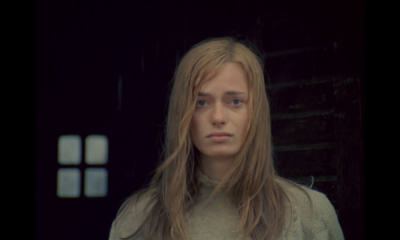
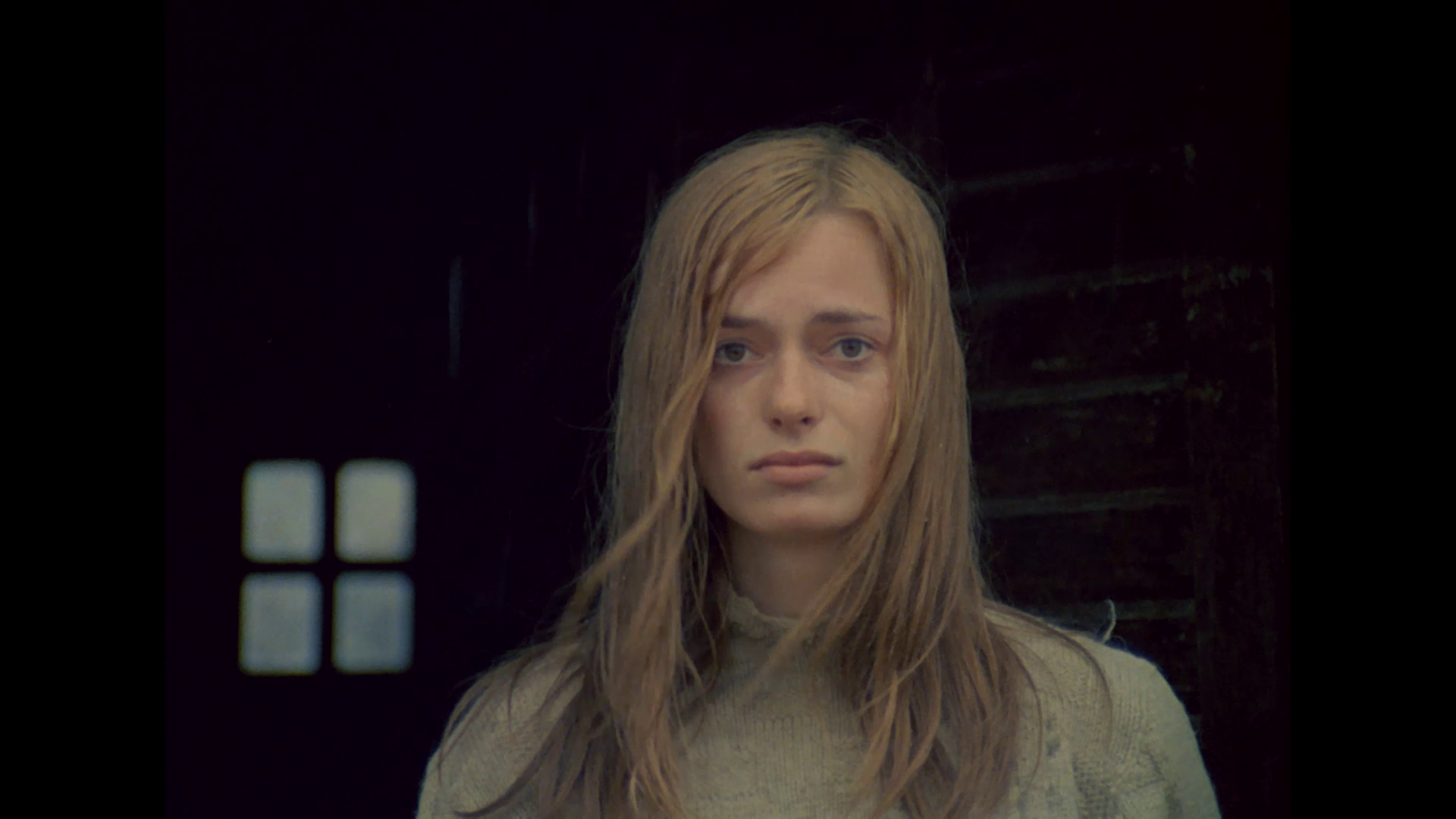
The first screening within the programme took place on 2 July at 9 p.m. at the Cultural Information Centre (KIC). On that occasion, the modernist classic The Birch Tree (Breza, 1967), directed by Ante Babaja, was screened with audio description for blind and partially sighted audiences and standardised subtitles for Deaf and hard of hearing audiences. Admission to the screening was free.
Based on the novella of the same name by Slavko Kolar, The Birch Tree tells the moving story of Janica, a gentle village girl whose life is tragically destroyed by primitive living conditions and the harshness of human relationships. The film is distinguished by the powerful performances of Fabijan Šovagović and Velimir “Bata” Živojinović, as well as the understated appearance of Slovenian model Manca Košir. At the 1967 Pula Film Festival, it received the Silver Arena, the Golden Arena for Best Actor, awarded to Bata Živojinović, and the award for cinematography, presented to Tomislav Pinter.
By introducing the Without Barriers programme, the Croatian Film Association continues its long-standing efforts to develop audiences and ensure access to film content for different groups of viewers. For the past ten years, the Association has organised a Sensory Screenings programme intended for children with sensory disabilities and their families, making it one of the pioneers of this model of film exhibition in Croatia.
The new programme is a natural continuation of this work and the first step towards the systematic inclusion of blind and partially sighted people, as well as Deaf and hard of hearing people, in the regular film programme of Tuškanac Cinema.
The audio description for the films was produced by the Centre for Audio Description, a business specialising in the production and adaptation of audiovisual content owned by Antonio Pavlović, while the standardised subtitles for Deaf and hard of hearing audiences were prepared by the Zaželi Association.
The Croatian Film Association points out that the Without Barriers programme is part of the project Film Programmes Beyond Tuškanac Cinema: Audiences at the Centre, implemented with the support of the Ministry of Culture and Media of the Republic of Croatia.
– The Without Barriers programme is part of the Croatian Film Association’s project Film Programmes Beyond Tuškanac Cinema: Audiences at the Centre, implemented with the support of the Ministry of Culture and Media of the Republic of Croatia. Through the Tuškanac on Tour programme, we will gradually seek to include films with audio description for blind and partially sighted people and subtitles adapted for Deaf and hard of hearing people in our regular programme. The pace at which these screenings are introduced will depend on the availability of screening slots at the institutions we visit, as well as on the financial resources secured for the implementation of the programme. The next adapted screening is planned for the autumn, when we will present Rajko Grlić’s film Once Upon a Time There Was a Country (Samo jednom se ljubi). From 2027 onwards, our goal is to have at least one film per month in our regular programme adapted for blind and partially sighted people, as well as Deaf and hard of hearing people – the Croatian Film Association said.
Disability rights advocates are warning that the latest actions by U.S. President Donald Trump’s administration could undermine decades of progress toward inclusion and increase the risk of people with disabilities being placed back into institutional care
Listen to the article
The concerns stem from two recent decisions by the U.S. administration. The Department of Education has announced plans to transfer responsibility for special education to the Department of Health and Human Services, headed by Robert F. Kennedy Jr. Meanwhile, the Department of Justice has issued a new legal interpretation that could weaken the right of people with disabilities to live in the community.
According to disability rights advocates, these decisions mark a shift away from viewing people with disabilities as equal members of society and toward the so-called medical model of disability, which primarily regards disability as a condition to be treated or corrected.
Selene Almazan, Legal Director of the Council of Parent Attorneys and Advocates, described the moves as a direct attack on the right of people with disabilities to live lives comparable to those of people without disabilities.
Since the 1960s, the United States has gradually moved away from placing people with intellectual disabilities and mental illnesses in large institutions. A series of laws and court rulings has enabled children with disabilities to attend mainstream schools while allowing adults to live and work in their communities with appropriate support.
Particularly significant was the landmark 1999 U.S. Supreme Court decision in Olmstead v. L.C., which established that the unjustified segregation of people with disabilities constitutes discrimination. The ruling requires states to provide services in the most integrated setting appropriate, ensuring that people with disabilities have the opportunity to live, study, and work in the community whenever possible.
However, a new opinion issued by the Department of Justice’s Office of Legal Counsel argues that neither the Americans with Disabilities Act nor Section 504 of the Rehabilitation Act requires states to provide services in such integrated settings. Although the law itself has not changed, the new interpretation could influence how federal agencies enforce disability rights laws and encourage some states to reduce investment in community-based support services.
Additional concern has been raised by the transfer of special education responsibilities from the Department of Education to the Department of Health and Human Services. Organizations representing people with disabilities argue that education should not be treated as a medical issue but as a matter of equal opportunity and the fundamental right to education.
Criticism has also intensified because of previous statements made by Health and Human Services Secretary Robert F. Kennedy Jr. about autism. Kennedy has repeatedly made claims that contradict the scientific consensus, including suggesting a link between vaccines and autism and stating that people with autism would be unable to live independently or hold jobs.
Following widespread criticism, Kennedy clarified that he had been referring to people with the most severe forms of autism. Nevertheless, his remarks continue to fuel distrust among disability advocacy organizations.
Zoe Gross of the Autistic Self Advocacy Network emphasized that the special education system exists to help students with disabilities develop their abilities and reach their full potential. She questioned whether the new leadership would remain committed to fulfilling that mission.
Parents of children with disabilities have also voiced concern about the potential consequences. Lindsey Althaus of Ohio said that her 12-year-old son, who has autism and apraxia, attends school alongside his non-disabled peers and participates in everyday activities thanks to community-based support services. She fears that reducing states’ obligation to fund such programs could ultimately lead to their elimination.
Magda Nakassis of Maryland shared similar concerns. Her non-speaking son, who has autism, attends a public school where he takes part in inclusive educational programs alongside other students. She stressed that the right to education is not a medical issue but one of equality, dignity, and belonging.
Disability rights organizations conclude that the combination of changes to special education and the new interpretation of federal civil rights protections could pose the greatest challenge to inclusive disability policies in the United States in decades. They warn that people with disabilities could once again be pushed to the margins of society at a time when inclusion has become a widely accepted goal of modern democratic societies.



















 Osobe s invaliditetomPrije 4 dana
 VijestiPrije 24 sata
 MedicinaPrije 6 dana
 Video / podcastPrije 5 dana
 Life&StylePrije 4 dana
 Osobe s invaliditetomPrije 23 sata
 KulturaPrije 6 dana
 in MREŽAPrije 5 dana